


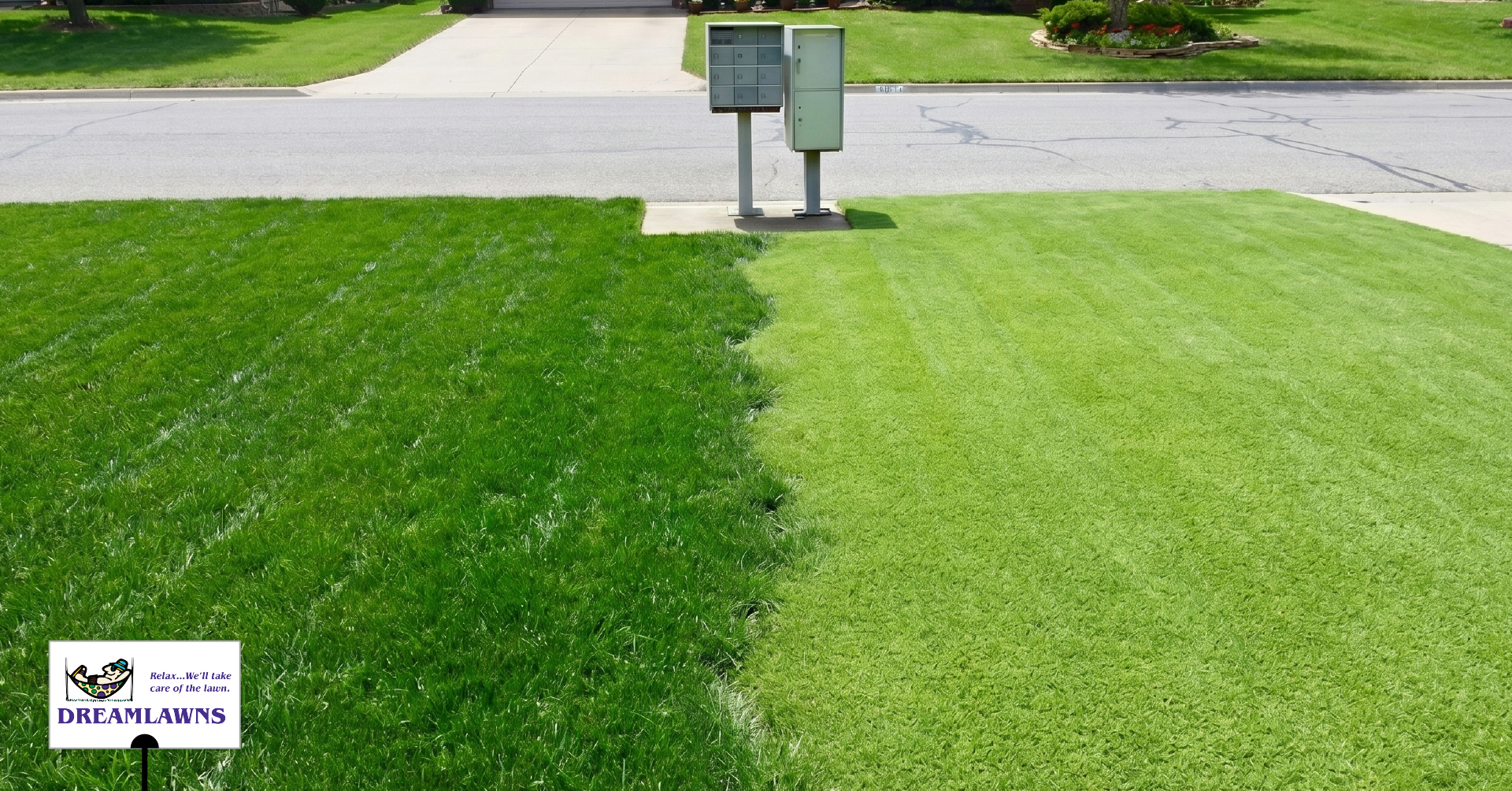
Dreamlawns Quick Cut: Virginia Beach sits in the transition zone, where cool-season and warm-season grasses both grow, but neither has it completely easy. Tall Fescue is the dominant cool-season option. Bermuda, Zoysia, and St. Augustine are the three main warm-season choices. Each grass has a different growing season, a different care calendar, and different strengths and weaknesses for this specific coastal climate. This guide helps you figure out which one you have, which one you want, and what that means for how your lawn should be managed.
Virginia Beach sits in what turf specialists call the transition zone, the band of the country where summers are too hot for cool-season grasses to thrive without stress and winters are too cold for warm-season grasses to stay green year-round. No grass type has it perfectly easy here, but several perform very well when managed correctly for this specific coastal climate.
The four grasses Dreamlawns works with most in Virginia Beach are Tall Fescue, Bermudagrass, St. Augustine, and Zoysiagrass. Each one behaves differently, peaks at different times of year, and requires a completely different care calendar. A fertilization schedule that’s ideal for Fescue actively harms a Bermuda lawn. A pre-emergent applied at the right time for Bermuda may be too late for Fescue. Aeration timing that benefits St. Augustine can stress Fescue if applied in the same window.
Understanding which grass you have, and what that grass actually needs in this climate, is the foundation of every other lawn care decision. This guide covers the key differences between grass types in Virginia Beach and helps you figure out which one is right for your property.
What Is the Difference Between Cool-Season and Warm-Season Grass?
The terms cool-season and warm-season refer to when a grass does its most active growing, which in turn determines when it needs the most care and when it’s most vulnerable to stress.
Cool-season grasses like Tall Fescue grow most actively in spring and fall when temperatures are moderate, slow down in summer heat, and remain green through Virginia Beach’s mild winters. They don’t go dormant the way warm-season grasses do, but they do thin and stress in summer, and that summer stress is what drives the need for fall aeration and overseeding to restore density heading into winter.
Warm-season grasses like Bermuda, St. Augustine, and Zoysia peak in summer heat and go fully dormant and brown once temperatures drop consistently in fall. They green up again in spring as temperatures warm. During dormancy, they need virtually no care. During summer, they’re at their most vigorous and respond best to fertilization, mowing, and pest management.
This single difference drives nearly everything else in lawn care. Fertilization windows, aeration timing, disease pressure, weed vulnerability, and overseeding needs all of it flows from whether the grass grows actively in warm or cool temperatures. In Virginia Beach’s transition zone climate, both types can be grown successfully, but each comes with its own set of trade-offs that matter for real-world homeowners.
Which Grass Types Are Common in Virginia Beach?
Here’s a quick profile of each of the four grasses you’re most likely to encounter in Virginia Beach lawns.
Tall Fescue
Tall Fescue is the most common lawn grass in Virginia Beach and the only cool-season grass that performs reliably in this climate. It stays green year-round under normal conditions, handles mild winters without going dormant, and tolerates more heat than most other cool-season grasses. Its key limitation is that it’s a bunch-type grass that doesn’t spread, meaning thin and bare areas require annual overseeding to restore density. It also thins in summer from heat and disease pressure, making fall the most important season for its care. For a complete breakdown, see our Virginia Beach Fescue owner’s guide.
Bermuda
Bermudagrass is the most aggressive and traffic-tolerant warm-season grass in Virginia Beach. It spreads through both above-ground stolons and below-ground rhizomes, fills in bare spots quickly, and recovers from damage faster than any other grass in the area. It requires full sun, goes completely dormant and brown in winter, and needs more frequent mowing and fertilization than the other warm-season options. Its most important and most commonly misunderstood disease threat is spring dead spot, a fungal disease that requires fall prevention rather than spring treatment. For a complete breakdown, see our Virginia Beach Bermuda owner’s guide.
St. Augustine
St. Augustine is the best shade-tolerant warm-season grass available in Virginia Beach, making it the go-to choice for properties with significant tree coverage where Bermuda would fail. It spreads through above-ground stolons, fills in bare areas on its own, and handles the heat and humidity of a Virginia Beach summer well. Its primary pest threat is the southern chinch bug, which targets St. Augustine almost exclusively and causes damage easily mistaken for drought stress. Gray leaf spot disease is the primary disease concern in the summer. For a complete breakdown, see our Virginia Beach St. Augustine owner’s guide.
Zoysia
Zoysiagrass is the most naturally weed-suppressive and lowest-maintenance warm-season grass once established. Its dense, carpet-like canopy during the growing season physically excludes most weeds, and its slower growth rate means less frequent mowing than Bermuda requires. The trade-off is a longer establishment period, a longer dormancy window than the other warm-season grasses, and slow recovery when damage does occur. Large patch disease at seasonal transitions and hunting billbugs in summer are its most specific threats. For a complete breakdown, see our Virginia Beach Zoysia owner’s guide.
How Do You Know Which Grass You Have?
Many Virginia Beach homeowners genuinely aren’t sure what grass they’re managing, particularly in established lawns where the original installation isn’t documented. Here are the most reliable visual identifiers for each grass type.
- Tall Fescue: Medium to coarse blade texture, grows in clumps with no lateral spread, stays green through winter, tends to thin in summer. If your lawn has visible bare patches in September that don’t fill in on their own, you almost certainly have Fescue.
- Bermudagrass: Fine to medium texture, spreads aggressively in all directions, turns brown in winter, thrives in full sun, and looks noticeably thin or dead in shade. The density and speed of lateral spread in summer are the most recognizable characteristics.
- St. Augustine: Very broad, flat blade with a blue-green color that’s distinctive compared to the other grasses. Spreads by above-ground stolons that are visible on the soil surface. Handles shade better than Bermuda or Zoysia. Goes dormant in winter but is typically green longer into fall than Bermuda.
- Zoysiagrass: Dense, wiry texture that feels stiff or almost bristly underfoot compared to the other grasses. Spreads more slowly than Bermuda, goes dormant in winter, and has a noticeably tight canopy during the growing season that feels like a carpet. If your lawn is extremely dense and slow-growing with a slightly rigid feel, it’s likely Zoysia.
It’s also worth noting that mixed lawns are common in Virginia Beach. Fescue yards often have Bermuda creeping in from a neighboring property. Properties that were overseeded years ago may have multiple warm-season grasses in different areas. If you’re not certain, a professional evaluation removes the guesswork before you start applying treatments.
What Are the Key Differences in Seasonal Behavior?
The clearest way to understand the difference between these grass types is to walk through the year and see what each one is doing at any given point.
Winter
Tall Fescue stays green and active through Virginia Beach’s mild winters, continuing to develop roots below the surface even as blade growth slows. It’s the only grass in this group that maintains its color through the cold months. Bermuda, St. Augustine, and Zoysia all go fully dormant and turn brown. Zoysia typically enters dormancy earliest in the fall and greens up latest in the spring. Bermuda is usually the quickest to green up once temperatures rise.
Spring
Spring is the transition season, and it plays out very differently for each grass. Fescue is finishing its active growth period and beginning to slow as temperatures rise. Bermuda greens up first among the warm-season grasses, typically in mid-to-late April in Virginia Beach. St. Augustine follows shortly after. Zoysia greens up last, sometimes not reaching full color until mid-May. For Fescue homeowners, spring is the time for pre-emergent weed control and light fertilization. For warm-season homeowners, it’s the time to watch for disease damage from the dormancy period and prepare for the first fertilization after full green-up.
Summer
Summer is when warm-season and cool-season grasses trade places. Bermuda, St. Augustine, and Zoysia are at peak vigor from June through August, growing fast, spreading, and responding well to fertilization and care. Fescue is under stress. Heat, humidity, and disease pressure thin it, and the right response is to manage that stress rather than push growth with heavy inputs. Mow high, water deeply, and hold heavy fertilization until fall when Fescue can actually use it.
Fall
Fall is Fescue’s most important season. Aeration and overseeding in mid-September through mid-October restores the density lost over summer and sets the lawn up for the following year. Fertilization during this window supports root development heading into winter. For warm-season grasses, fall means the opposite: slow down inputs, apply pre-emergent for winter weeds before dormancy, stop fertilizing, and apply preventive fungicide for spring dead spot in Bermuda or large patch in Zoysia and St. Augustine before the fungi become active in cooling soils.
Which Grass Is Right for Your Virginia Beach Property?
The right grass depends on your property’s conditions, your lifestyle, and what you want from your lawn. Here’s how we typically think through that decision.
- Full sun, high traffic, fast recovery: Bermudagrass. Nothing in Virginia Beach recovers from damage faster or handles heavy use better. If your lawn takes a beating from kids, dogs, or regular activity and you have full sun, Bermuda is the strongest choice.
- Partial shade or significant tree coverage: St. Augustine is the best warm-season option for shaded properties. For heavier shade where warm-season grasses struggle entirely, Fescue is the more appropriate choice.
- Long-term low maintenance, willing to wait for establishment: Zoysiagrass. Once established, it requires less mowing than Bermuda, suppresses weeds better than any other grass during the growing season, and tolerates drought well. The trade-off is a slow establishment period and a long dormancy window.
- Year-round green color: Tall Fescue. It’s the only grass in this group that stays green through a Virginia Beach winter. If brown turf from November through March is unacceptable to you, Fescue is the answer.
- Rental property or straightforward management: Fescue or common Bermuda. Both are widely understood, relatively forgiving, and don’t require the precision management that hybrid Bermuda or fine-textured Zoysia varieties demand.
- Heavy shade with tree canopy throughout the property: Tall Fescue is the more reliable choice where shade is significant and consistent. St. Augustine handles moderate shade but struggles in deep shade. Bermuda and Zoysia are not viable options in shaded conditions.
It’s also worth noting that the “right” grass for a property isn’t always the one already growing there. If your Fescue lawn has been losing ground to Bermuda creeping in from a neighboring yard, the most practical path forward might be embracing the Bermuda rather than fighting it. If your St. Augustine is struggling in an area that has lost significant tree cover, switching to Bermuda or Zoysia in that zone may outperform trying to maintain a grass that no longer fits the conditions.
Why Does the Right Care Program Depend on the Grass Type?
This is the point that most generic lawn care advice misses entirely. The same input, fertilizer, pre-emergent, aeration, fungicide, produces very different results depending on which grass it’s applied to. In some cases, the wrong treatment at the wrong time does active damage.
Fertilizing Fescue in July with high nitrogen pushes weak, disease-susceptible top growth during its most stressed period. Fertilizing Bermuda in October promotes soft growth that enters winter without hardening off and is more vulnerable to cold damage and large patch disease. Aerating Fescue in August stresses a grass that’s already struggling with heat. Aerating Bermuda in October misses the active-growth window when the lawn can actually recover and benefit from the treatment.
Pre-emergent timing is another area where grass type changes everything, but not always in the ways homeowners assume. Fall pre-emergents for winter weed prevention are applied to warm-season grasses like Bermuda, Zoysia, and St. Augustine, where the dormant turf can’t compete with cool-season weeds on its own. Fescue is skipped in the fall pre-emergent window because fall is overseeding season, and pre-emergent products prevent all seed germination, including Fescue.
The spring pre-emergent window for crabgrass is largely the same across Fescue, Bermuda, and Zoysia, though Dreamlawns typically starts the rounds slightly later for warm-season lawns. Spring pre-emergent is handled differently for St. Augustine. A healthy, dense St. Augustine lawn usually doesn’t need spring pre-emergent at all, and on thinner lawns, the product can cause clubbing on stolon roots that reduces lateral spread. In some years, a low-rate spring pre-emergent application in mid-spring is appropriate for St. Augustine, but it’s a judgment call based on the lawn’s condition rather than a default treatment.
Disease management windows differ by grass too. Spring dead spot prevention in Bermuda requires fall fungicide, while large patch prevention in Zoysia and St. Augustine follows the same fall timing but targets a different disease with different treatment protocols.
The practical takeaway: a lawn care program built around the wrong grass type, or a generic program not tailored to any specific grass, will consistently underperform regardless of how well it’s executed. Knowing what you’re managing is step one. Building the program around the grass’s actual needs in this climate is step two.
How Does Dreamlawns Help Virginia Beach Homeowners Choose and Manage the Right Grass?
Every Dreamlawns program starts with a property assessment that confirms the grass type, evaluates soil conditions, identifies existing stress or damage, and maps out the care program from there. We don’t apply a standard treatment schedule and hope it works. We build programs around what the specific grass on the specific property in Virginia Beach’s specific climate actually needs.
That means Fescue programs are built around fall as the primary treatment window, with aeration and overseeding timed to mid-September through mid-October and fertilization supporting root development through winter. Bermuda programs account for spring dead spot prevention every fall, armyworm monitoring in late summer, and a fertilization schedule that reflects Bermuda’s heavier nitrogen demand. St. Augustine programs include chinch bug monitoring through every summer service visit. Zoysia programs keep fertilization moderate and end earlier in the fall to reduce large patch risk as temperatures drop.
We also help homeowners navigate transitions. Whether that’s advising on a grass change based on changing sun conditions, managing a mixed-grass property with areas of both Fescue and Bermuda, or planning a full renovation when a lawn has declined past the point where maintenance alone will restore it.
Contact us today to schedule a property assessment. We’ll identify your grass type, evaluate your lawn’s current condition, and build a program around what it actually needs, not what works for a different grass in a different climate.
Frequently Asked Questions
Tall Fescue is the most common lawn grass in Virginia Beach by a significant margin. It’s the dominant grass across most established residential neighborhoods and performs well in the transition zone climate when managed correctly. Among warm-season grasses, Bermudagrass is the most widely present, particularly in newer developments and properties with full sun exposure. For a full overview of Fescue in this area, see our Virginia Beach Fescue owner’s guide.
There is no single best grass for Virginia Beach because the right choice depends on your property’s sun exposure, soil conditions, traffic patterns, and what you want from your lawn. Tall Fescue is the best option for year-round green color and shaded conditions. Bermuda is the best for full sun, high traffic, and fast recovery. St. Augustine is the best warm-season option for partial shade. Zoysia is the best long-term low-maintenance option for homeowners willing to wait for establishment. The best grass is the one that matches your property’s conditions and your expectations.
Tall Fescue is the only grass in this group that stays green through a Virginia Beach winter. It’s a cool-season grass that remains active through mild temperatures rather than going dormant. Bermuda, St. Augustine, and Zoysia all turn brown and go dormant once temperatures drop consistently in fall, typically from November through March or April, depending on the year and variety. If year-round green color is a priority, Fescue is the answer. See our Fescue owner’s guide for everything it takes to maintain a healthy Fescue lawn in Virginia Beach.
Yes, and many Virginia Beach lawns already do. Mixed lawns have a primary grass with a secondary grass blended throughout the same area, often unintentionally. The most common example is a Fescue lawn with common Bermuda spreading into it from neighboring properties. Mixed lawns are managed based on the primary turf, so a Fescue and Bermuda mix is treated as a Fescue lawn without trying to accommodate the secondary grass. Split lawns are different. These properties have one grass type in one location and another grass type in a different location, such as a Fescue front yard for curb appeal paired with a hybrid Bermuda backyard for durability. Split lawns require a split-turf program that treats each section according to its own care calendar, since applying a Fescue program to a Bermuda section, or vice versa, produces poor results in both.
Lawn Care Services In The Virginia Beach Area
Dreamlawns provides superior lawn care service to Virginia Beach & Chesapeake VA residents.

