


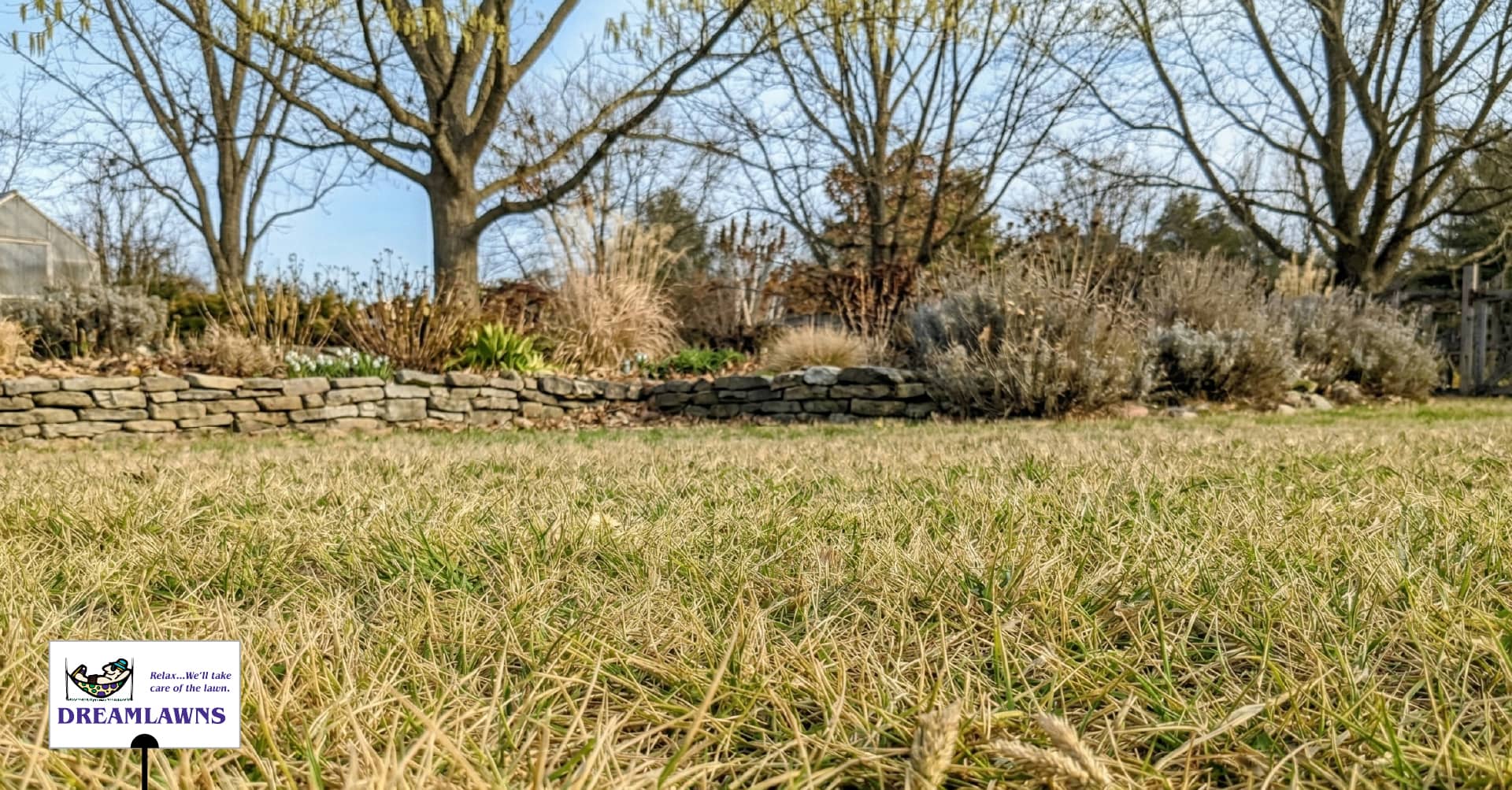
Dreamlawns Quick Cut: Early spring lawn care in Virginia Beach is less about doing more and more and more about doing the right things at the right time. Fertilizing before turf is actively growing, mowing saturated soil, and applying pre-emergent on a calendar schedule rather than soil temperature are the most common ways homeowners cause setbacks in spring. Monitor conditions, act at the right moment, and save the heavier treatments for when the lawn is actually ready.
The first warm days of March and April have a way of making Virginia Beach homeowners restless. After a winter of watching your warm-season lawn sit dormant, the impulse to get outside and do something is completely understandable. But that impulse, when it turns into action too early, is one of the most common ways lawns get set back before the growing season even begins.
Early spring lawn care isn’t always a problem. The problem is timing. Spreading fertilizer when the soil is still cold, running a mower over saturated ground, or applying pre-emergent based on the calendar rather than soil temperature can all do real damage to a lawn that was quietly on track to recover on its own. In many cases, the treatments meant to speed things up end up slowing them down.
This isn’t about avoiding spring lawn care altogether. It’s about understanding what the lawn actually needs at this stage, and what it’s not ready for yet. The turf has its own schedule, and working with it rather than around it leads to better results through summer and fall.
What Is Your Lawn Actually Doing in Early Spring?
Before deciding what to do to your lawn, it helps to understand what’s happening inside it. For cool-season grasses like Tall Fescue, which makes up the majority of lawns in the Virginia Beach area, early spring is a fragile recovery period, not a growth period.
Through winter, Fescue remains active below the surface, slowly building root reserves and preparing for spring growth. But in late February and early March, soil temperatures are still low, often well below the 50°F threshold where cool-season grasses begin actively growing. The turf may look greenish, especially after a mild stretch, but appearance can be misleading. Roots are still shallow, soil is frequently saturated from winter rainfall, and the plant hasn’t yet built the carbohydrate reserves it needs to handle additional stress.
This context matters because every mistake covered below hits harder during this window than it would later in the season. A lawn that’s already in a vulnerable recovery phase has limited ability to compensate for added pressure.
Why Does Fertilizing Too Early Backfire?
Fertilizing is probably the most common early spring lawn care mistake, and it’s easy to understand why it happens. The lawn looks like it needs a boost, the weather is warming up, and the urge to do something productive is strong. But applying nitrogen before the warm-season turf is actively growing creates a chain of problems that can follow the lawn for months.
When nitrogen is applied to cold or semi-dormant turf, it forces top growth before the root system is ready to support it. The grass blade grows faster than the roots beneath it, creating an imbalance that weakens the plant structurally. That weak, fast-growing turf is then more vulnerable to disease, temperature swings, and drought stress as conditions change through spring.
Premature fertilization also increases the risk of fertilizer burn, particularly in lawns with poor drainage or compacted soil where nutrients can’t move efficiently into the root zone. And in saturated late-winter soils, a significant portion of those nutrients may leach through before the lawn can use them, wasting product and adding unnecessary chemicals to the environment.
Proper fertilization timing is tied to soil temperature and active turf growth, not to what the calendar says or what the weather felt like last week. For Fescue lawns in Virginia Beach, early spring fertilization should wait until the turf is consistently growing and able to absorb and use what’s applied.
Can Mowing Too Early Damage Your Lawn?
Yes, and it does so in two distinct ways. The first is soil compaction. A mower, even a residential push mower, is heavy equipment. When it rolls over saturated late-winter soil, it compresses the soil particles and reduces the pore space roots need to grow. Do that repeatedly in the same areas and you’re building a compaction problem that will show up as thin, struggling turf months later.
The second issue is cutting height. Grass that hasn’t reached the right height before its first mow gets scalped, losing more blade surface than it can afford at a time when it’s still building energy reserves. For Tall Fescue, the standard recommendation is to wait until blades are at least 3.5 to 4 inches tall before the first cut of the season, and then mow at 4 inches. Cutting below that removes stored carbohydrates that the plant is relying on to fuel root development.
A simple test before that first spring mow: walk the lawn and check whether your footprints spring back quickly or whether they linger. Slow recovery means the soil is still too saturated to handle mower weight without compaction damage.
Does Foot Traffic in Early Spring Cause Long-Term Problems?
It can, and this applies to more than just walking across the lawn. Raking aggressively, running a dethatching machine before the turf is established, and even heavy cleanup activity can all pull up grass crowns and damage plants that would have recovered naturally with a little more time.
Wet, cold soil compacts under pressure much more easily than warm, dry soil. Every footstep, wheelbarrow pass, or equipment run over saturated ground pushes soil particles closer together and reduces the air pockets roots depend on. This kind of compaction builds gradually and is often not obvious until the lawn starts showing thin, struggling patches in areas that got the most traffic.
Light debris removal is fine and appropriate in early spring. The issue is intensity and timing. Postponing heavy raking, core aeration, and equipment-based work until the soil has dried out and the turf is actively growing protects the lawn during its most vulnerable window.
Why Is Pre-Emergent Timing So Misunderstood in Spring?
Pre-emergent herbicide is one of the most valuable tools in spring lawn care, and one of the most commonly mistimed. Apply it too early, and it breaks down before weed seeds actually germinate. Apply it too late, and those seeds are already sprouting, rendering the barrier useless. Either way, the summer ends up being a weed management problem that could have been avoided.
The most common warm-season weed that catches Virginia Beach homeowners off guard is crabgrass, which germinates when soil temperatures consistently reach around 55°F at a 2-inch depth. That threshold typically arrives somewhere between mid-March and mid-April in this area, depending on the year. Applying pre-emergent based on a fixed calendar date rather than actual soil temperature conditions almost always results in poor timing.
There’s also a seeding conflict to be aware of. Pre-emergent products prevent seed germination, which means they can’t be applied if you’re planning to overseed in the same window. For Fescue lawns that had fall overseeding, this is generally not an issue in spring. But for lawns that need additional seeding work, pre-emergent timing requires careful coordination with the overall lawn care plan.
It’s also worth noting that the most effective weed prevention window is actually fall, not spring. Weeds like chickweed, henbit, and annual bluegrass germinate in fall and overwinter, meaning spring is often too late to stop what’s already established. A proactive fall pre-emergent program reduces the weed burden that spring treatments have to deal with in the first place.
What Should You Actually Do in Early Spring?
The goal of early spring lawn care isn’t to push the lawn into growth. It’s to remove obstacles, monitor conditions, and be ready to act at the right moment rather than the first available one. Here’s what that looks like in practice.
- Light debris removal: Clear leaves, sticks, and any material that’s blocking sunlight or trapping moisture against the turf. Keep it light. This is not the time for aggressive raking or dethatching.
- Evaluate drainage and low spots: Early spring is a good time to identify areas that hold water after rain. These spots are prime candidates for compaction, disease, and recurring weed pressure. Note them for targeted aeration later in the season.
- Adjust irrigation: Proper watering in early spring means scaling back or turning off irrigation entirely until the turf is actively growing. Virginia Beach spring rainfall typically provides adequate moisture, and overwatering in cool weather is a leading cause of fungal disease.
- Monitor soil temperature: Soil temperature is the most reliable indicator for when treatments are actually appropriate. Inexpensive soil thermometers are widely available and remove the guesswork from fertilization and pre-emergent timing decisions.
- Plan fall treatments now: If aeration and overseeding or a fall pre-emergent program isn’t already scheduled, early spring is the right time to build that plan. The best results in fall come from decisions made months ahead of time.
How Does Dreamlawns Approach Early Spring Lawn Care?
At Dreamlawns, early spring is a monitoring and planning phase, not an intervention phase. Rather than applying treatments on a fixed schedule, we evaluate turf condition, soil temperature, moisture levels, and winter stress before recommending any action. For most Virginia Beach lawns, that means the real treatment work starts later in spring than many homeowners expect, and that’s intentional.
When we do apply treatments, the timing is tied to what the lawn actually needs rather than what’s convenient. Pre-emergent goes down when soil temperatures call for it. Fertilization follows the turf’s growth cycle, not the calendar. Aeration and overseeding are reserved for fall when Fescue can establish properly before summer heat arrives.
Homeowners enrolled in a year-round program don’t have to think about any of this, because those decisions are already built into the plan. Spring treatments are scheduled based on soil conditions and turf response, fall work is mapped out in advance, and nothing gets applied until the lawn is ready to benefit from it.
If your lawn came out of winter looking thin, patchy, or uneven, the answer probably isn’t more early spring treatment. It’s a proper evaluation to understand what happened and a plan that addresses the root cause rather than the symptom. Contact us today for a property assessment, and let’s build a plan that works with your lawn’s schedule, not against it.
Frequently Asked Questions
In Virginia Beach, the right time to begin active spring lawn care is when soil temperatures consistently reach 50°F or above, and the turf is actively growing, typically mid-to-late March at the earliest, depending on the year. Light cleanup can happen earlier, but fertilization, pre-emergent, and equipment use on the lawn should wait until conditions support them.
For most Virginia Beach lawns, early March is too early for fertilization. Applying nitrogen before the turf is actively growing forces top growth that the root system can’t support, increases disease risk, and wastes product. Wait until soil temperatures are consistently above 50°F and you see active growth, not just green color.
You can, but only when conditions are right. Avoid mowing when the soil is saturated, as mower weight compacts wet soil. For Tall Fescue, wait until blades are at least 3.5 to 4 inches tall before the first cut, and mow at 4 inches. If your footprints linger after walking the lawn, the soil is still too wet for mowing.
For Tall Fescue lawns in Virginia Beach, fall is the preferred time for core aeration because it aligns with the grass’s active growth period and allows recovery before winter. Spring aeration can be done in limited cases, but aerating cold, saturated soil can do more harm than good. If your lawn needs aeration, plan it for fall and focus spring energy on preparing the turf for summer.
Lawn Care Services In The Virginia Beach Area
Dreamlawns provides superior lawn care service to Virginia Beach & Chesapeake VA residents.

