


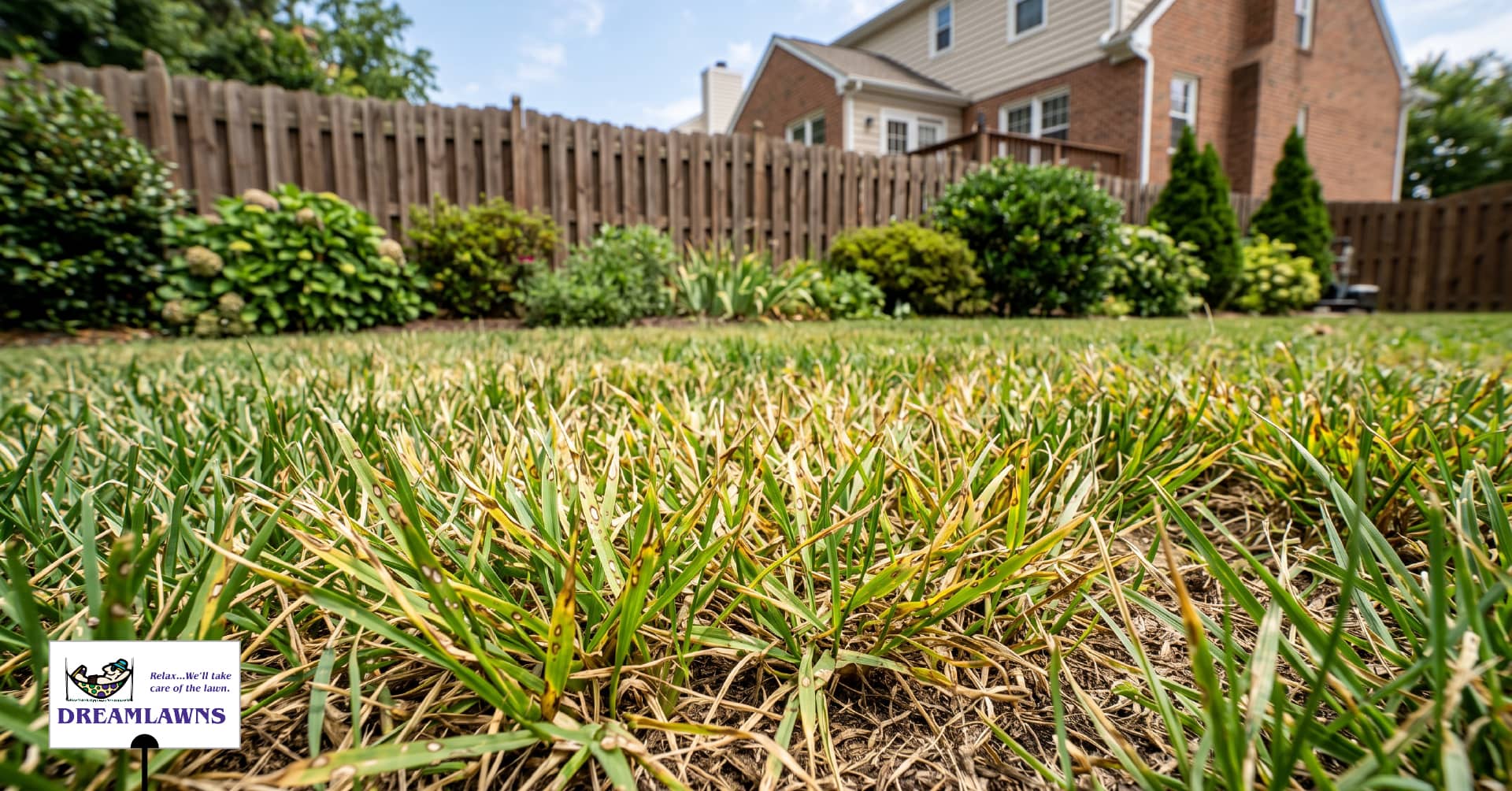
Dreamlawns Quick Cut: Just when Virginia Beach homeowners think their Fescue has survived summer, disease often comes roaring back in August. Slightly cooler nighttime temperatures combined with lingering humidity and heavy morning dew create a second window of disease pressure, with brown patch leading the way. This is exactly the wrong time to relax on disease vigilance. Understanding why August is high-risk, and managing watering and airflow accordingly, protects your Fescue heading into its fall recovery season.
You’ve watched your Fescue struggle through the worst of July’s heat. The days feel like they’re easing, the mornings are a touch cooler, and it seems like your lawn has made it through the hardest part of the year. Then, almost overnight, circular brown patches start spreading across the yard. It feels like it came out of nowhere, right when you thought the danger had passed.
This is one of the most common and most frustrating experiences for Fescue owners in Virginia Beach, and it’s no accident. August is often a second, sneaky peak of disease pressure for Fescue, not a reprieve from summer. The very conditions that make August feel milder than July, cooler nights especially, are part of what triggers this late-summer wave of disease.
Understanding why disease returns in August, how to recognize it, and how your own watering habits can make it better or worse is the key to protecting your Fescue through the end of summer and into its critical fall recovery season.
Why Does Fescue Disease Come Back in August?
The August resurgence of Fescue disease comes down to a specific combination of conditions that all line up at once in late summer. It feels counterintuitive, because the weather seems to be improving, but the changes that make August more comfortable for people make it more dangerous for Fescue.
- Warm but slightly cooler nights: Nighttime temperatures begin to dip in August, but they often stay in the range that fungal pathogens thrive in. The days are still warm, and the nights are just cool enough to encourage the moisture that disease needs, without getting cool enough to shut fungal activity down.
- Lingering humidity: Virginia Beach’s coastal humidity doesn’t disappear in August. That persistent moisture in the air keeps the turf canopy damp and the environment favorable for fungal growth.
- Longer, heavier dew: As nights grow longer and cooler, morning dew becomes heavier and lasts longer into the day. This extended overnight and early-morning leaf wetness is exactly what fungal diseases need to infect and spread. The grass stays wet for hours, giving pathogens the window they require.
Plant pathologists describe disease as a triangle: it requires a pathogen, a susceptible host, and a favorable environment, all present at the same time. In August, all three line up perfectly for Fescue. The pathogens are still active in the soil and thatch from the summer. The Fescue itself is still weakened and stressed from the long summer, making it a susceptible host. And the warm-day, cool-wet-night pattern creates the ideal environment. When those three converge, disease erupts, often faster and more visibly than it did earlier in the summer.
What Is Brown Patch and Why Does It Target Fescue?
The leading culprit behind August Fescue disease is brown patch, the most common and damaging late-summer disease for Fescue in Virginia Beach. It’s caused by the fungus Rhizoctonia solani, which becomes highly active when nighttime temperatures stay above roughly 70°F and the turf remains wet overnight, precisely the August pattern described above.
Brown patch is recognizable once you know what to look for. It appears as circular or irregular patches of tan, brown, or straw-colored turf, ranging from a few inches to several feet across. In the early morning, when dew is still present, you may see a darker grayish border around the edge of a patch, often called a smoke ring, which marks the actively spreading margin of the infection. The affected grass blades typically show tan lesions with darker borders.
Fescue is especially vulnerable to brown patch for a few reasons. As a cool-season grass, it’s already under significant stress during a Virginia Beach summer, which weakens its natural defenses. Its growth habit and blade structure hold moisture in ways that favor the fungus. And because Fescue is a bunch-type grass that doesn’t spread to fill in damaged areas, the thin and dead spots brown patch leaves behind don’t recover on their own. Once brown patch takes hold, it can spread rapidly across a lawn under the right conditions, which is why catching it early matters so much.
Are There Other Diseases to Watch For in Late Summer?
While brown patch is the headline concern, it’s not the only disease that threatens Fescue in late summer. Two others are worth knowing about, since August’s conditions favor them as well.
Gray leaf spot is particularly damaging to Fescue and thrives in the hot, humid conditions of late summer. It’s an especially important concern in the weeks around fall overseeding, because it targets young, tender Fescue seedlings aggressively. It appears as small tan or gray lesions on the grass blades that can quickly cause blades to wither and die. Warm, wet late-summer weather is exactly what it favors.
Pythium blight is less common but fast-moving and destructive. It thrives in hot, humid, saturated conditions and can damage large sections of turf within a day or two. It appears as greasy, water-soaked patches that collapse into matted areas. Overwatering and poor drainage are major contributors, which is another reason watering practices matter so much in late summer.
The common thread among all three is that they share the same triggers: warmth, humidity, and extended leaf wetness. That’s why August vigilance protects against the whole group, not just brown patch. Managing the conditions that favor one disease helps guard against all of them.
How Do You Know If It’s Disease and Not Something Else?
Brown patches in an August lawn could be disease, but they could also be drought stress, heat stress, or even grub damage. Because each of these calls for a completely different response, correct diagnosis is essential before you treat anything. Watering a disease problem, or applying fungicide to a drought problem, wastes time and money while the real issue continues. We cover this in depth in our guide on why your lawn is turning brown.
A few features point specifically toward disease rather than other causes. Disease patches often appear or spread rapidly, sometimes within a day or two, following warm, humid nights with heavy dew. Brown patch in particular tends to form roughly circular shapes and may show the telltale smoke ring border in the early morning. The timing is a strong clue: if brown patches emerge or expand right after a stretch of muggy nights, disease is the likely cause.
By contrast, drought stress usually appears in the hottest, sunniest, or highest spots first and shows as a bluish-gray tint with footprinting before browning. Grub damage produces turf that lifts easily from the soil because the roots are eaten. When you’re not certain, it’s worth getting a professional diagnosis rather than guessing, because the window to treat disease effectively can be short. Our guide on drought stress versus heat stress helps sort out the non-disease possibilities.
Why Does Watering Make August Disease Worse?
Here’s where homeowner behavior directly drives disease outcomes, for better or worse. In August, when heavy natural dew is already keeping the lawn wet overnight, watering practices that add even more overnight moisture can be the difference between a minor issue and a full-blown disease outbreak.
Evening and nighttime watering is the biggest culprit. When you water in the evening, the grass stays wet all night long, on top of the dew, creating an extended period of leaf wetness that fungal diseases need to infect and spread. You’re essentially handing the pathogens the exact conditions they’re waiting for. Overwatering in general compounds the problem by keeping the canopy and soil constantly moist, which is why disease so often shows up in chronically overwatered lawns.
The fix is simple and powerful: water early in the morning only, and water deeply but infrequently. Morning watering lets the lawn dry through the day so it isn’t sitting wet overnight, and the natural dew has a chance to evaporate rather than being extended by irrigation. Deep, infrequent watering builds healthier roots and avoids the constant surface moisture that shallow, frequent watering creates. This single adjustment, moving all watering to early morning, is one of the most effective disease-prevention steps a homeowner can take in August.
How Do You Prevent and Manage August Fescue Disease?
Managing late-summer Fescue disease is mostly about controlling the conditions that favor it and treating strategically when needed. Here’s what works.
- Water early morning only: Never water in the evening. Let the lawn dry before nightfall so it isn’t sitting wet overnight on top of the dew.
- Water deep and infrequently: Deep, infrequent watering supports healthy roots and avoids the constant canopy moisture that frequent, shallow watering creates.
- Improve airflow: Anything that helps the lawn dry faster reduces disease pressure. Avoid overcrowded plantings around the lawn and don’t let areas stay chronically damp.
- Mow correctly: Mow at the proper height for Fescue with a sharp blade, and never mow when the grass is wet, since mowing wet grass spreads disease from patch to patch on the mower.
- Avoid nitrogen during active disease and heat: Hold off on nitrogen fertilization during disease outbreaks and peak heat, because nitrogen pushes the tender, succulent growth that brown patch attacks most aggressively. Note this applies specifically to nitrogen, other nutrients like potassium may still have a role, but nitrogen is the one to avoid in these windows.
- Use preventive fungicide where warranted: For lawns with a history of brown patch, preventive fungicide applications during the high-risk late-summer window are far more effective than reacting after the disease has spread.
Above all, don’t panic-treat. Confirm that you’re actually dealing with disease before reaching for a fungicide, and match the treatment to the specific problem. Reacting blindly often means treating the wrong thing.
What Does August Disease Mean for Fall Recovery?
There’s an important connection between August disease and the fall season that follows. Every patch of Fescue that brown patch or another disease kills in August is a patch that won’t recover on its own, because Fescue doesn’t spread to fill in damaged areas. That late-summer disease thinning is precisely what fall aeration and overseeding is designed to address.
This means August disease management and fall recovery planning go hand in hand. The better you protect the lawn from disease through late summer, the less damage there is to repair in fall, and the stronger the lawn heading into its most important growing season. Conversely, a lawn hammered by August brown patch will lean heavily on fall overseeding to rebuild its density.
The takeaway is that August isn’t the finish line for Fescue care. It’s the bridge into the fall recovery season, and how you handle disease now shapes how much rebuilding the lawn needs later. Staying vigilant through August protects the investment you’ll make in fall aeration and overseeding.
How Does Dreamlawns Protect Fescue From Late-Summer Disease?
At Dreamlawns, we treat the August disease window as one of the most important periods of the Fescue year. Because late-summer disease can move fast and is so easily confused with drought and other problems, our approach starts with correct diagnosis, confirming whether disease is actually the cause before recommending treatment, so the response matches the real issue.
For lawns with a history of brown patch or other late-summer diseases, we build preventive fungicide applications into the program during the high-risk window, because prevention is far more effective than reacting after disease has spread. We also guide the watering, mowing, and airflow practices that reduce disease pressure in the first place, and we time fertilization to support the lawn without pushing the tender growth that disease attacks. Just as importantly, we coordinate disease management with the fall recovery plan, so the lawn moves from surviving late summer to rebuilding density in fall as smoothly as possible.
Contact us today to schedule a property assessment. We’ll evaluate your Fescue lawn’s disease risk and build a plan to carry it through late summer and into a strong fall recovery.
Frequently Asked Questions
Brown patch returns in August because the conditions line up perfectly for it. Nighttime temperatures dip slightly but stay warm enough for the fungus to thrive, coastal humidity lingers, and longer, cooler nights produce heavy morning dew that keeps the grass wet for hours. That extended leaf wetness, combined with Fescue that’s already stressed and weakened from summer, gives brown patch everything it needs. Evening watering makes it worse by adding even more overnight moisture.
Brown patch appears as circular or irregular patches of tan, brown, or straw-colored turf, ranging from a few inches to several feet across. In the early morning when dew is present, you may see a darker grayish border around the edge of a patch, called a smoke ring, which marks where the infection is actively spreading. Individual grass blades often show tan lesions with darker borders. The patches can appear suddenly and expand quickly after warm, humid nights.
No. Evening watering is one of the biggest contributors to late-summer disease in Fescue. Watering in the evening leaves the grass wet all night, on top of the natural dew, creating the extended leaf wetness that brown patch and other fungal diseases need to infect and spread. Always water early in the morning instead, so the lawn dries through the day and isn’t sitting wet overnight. Water deeply and infrequently rather than frequently and shallowly. See our guide on overwatered lawns for more.
It depends on the severity. Mild brown patch damage may recover as conditions improve and the lawn is cared for properly. But because Fescue is a bunch-type grass that doesn’t spread to fill in bare spots, significant brown patch damage often leaves thin or dead areas that won’t recover on their own. Those areas typically need fall overseeding to rebuild density. This is one of the main reasons managing disease in August matters so much, it reduces how much repair the lawn needs heading into fall.
Lawn Care Services In The Virginia Beach Area
Dreamlawns provides superior lawn care service to Virginia Beach & Chesapeake VA residents.

